
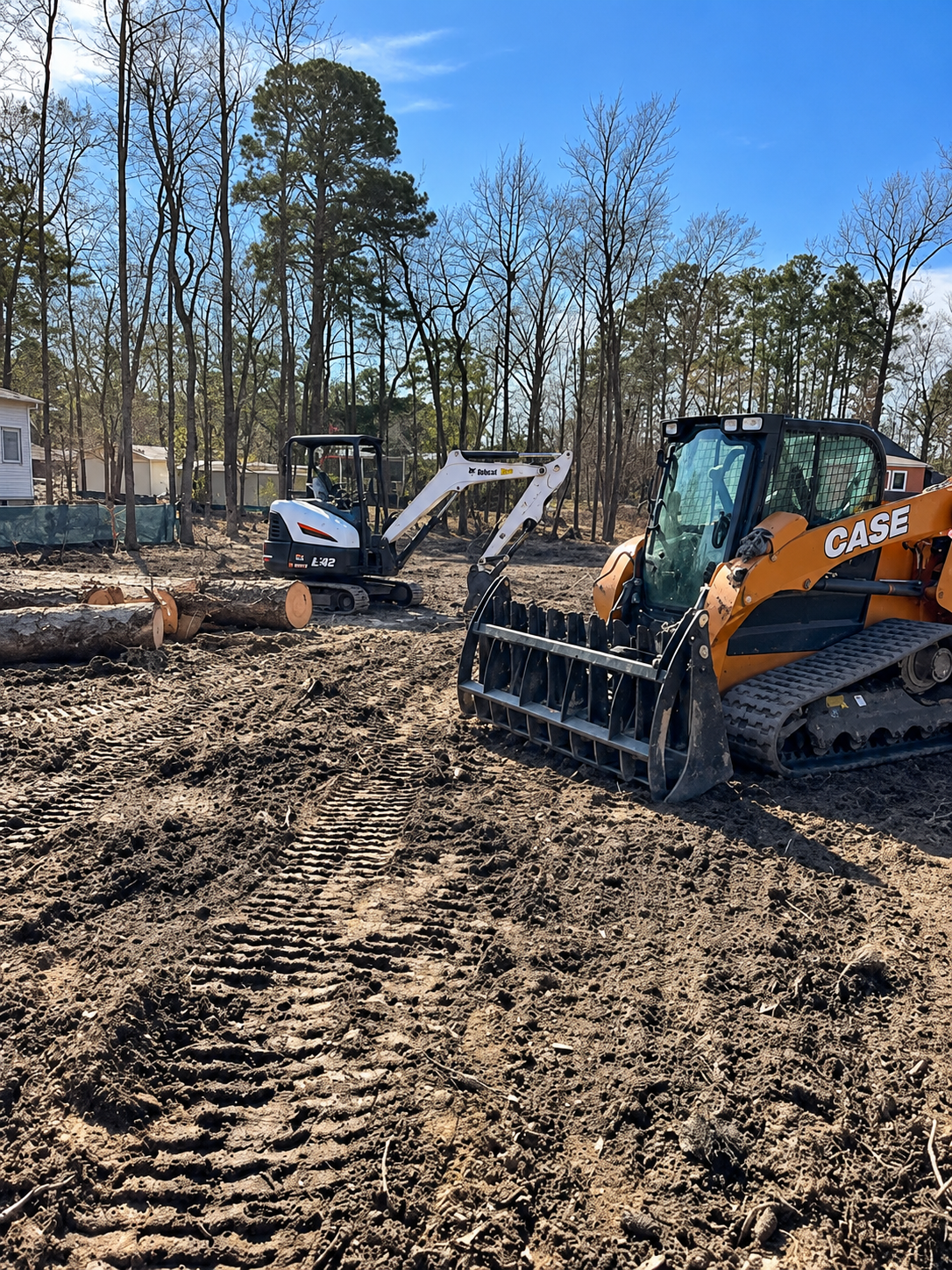
In Georgia, timing is one of the most overlooked factors in site preparation. The same clearing or grading job can go smoothly in one season and turn into a muddy, delayed mess in another. Augusta's climate — with its hot, humid summers, heavy thunderstorm activity, and wet winter and spring periods — has a direct impact on when land clearing, grading, and excavation should be scheduled. If you're planning a build or site project in the CSRA, understanding the seasonal rhythm helps you avoid delays, control costs, and get a better result.
How Georgia's Climate Affects Site Work
The Augusta region experiences distinct seasonal patterns that shape site work. Spring brings frequent rain and warming temperatures, which saturate the region's clay soils and make them soft and difficult to work. Summer is hot and humid, with afternoon thunderstorms that can dump significant rainfall in a short period — ideal conditions for erosion and washouts on unprotected ground. Fall generally offers more stable weather, with lower rainfall and moderate temperatures that make it one of the best windows for clearing and grading. Winter is cooler and wetter, with occasional freezes, but can still be workable during dry stretches.
The common thread is moisture. Augusta's red clay holds water for long periods, and when it's saturated, it loses strength. Heavy equipment sinks, trenches collapse, and compaction becomes nearly impossible. That's why scheduling site work during drier windows — or at least planning around forecasted rain — is so important.
Land Clearing: Best Done Before the Wet Season
Land clearing is less weather-sensitive than grading or excavation, but timing still matters. Clearing is best completed before the wettest part of the year so that the newly exposed ground can be graded and stabilized before heavy rain hits. If you clear a lot in the middle of a wet spring and then wait weeks to grade it, you're likely to face erosion, washed-out topsoil, and a soft, saturated site that's harder to prepare.
For that reason, late summer and fall are often ideal for clearing projects in the Augusta area. The ground is typically drier, thunderstorm activity begins to ease, and there's a window to move directly from clearing into grading and site preparation without long weather delays. On heavily wooded lots, clearing during the dormant winter season can also work well, since vegetation is less dense and easier to manage.
Grading and Compaction: Wait for Dry Ground
Grading and compaction are the most weather-sensitive site work activities, and they should be scheduled during the driest available window. Compaction in particular requires soil that's at the right moisture content — not too wet and not bone dry. When clay is saturated, compaction equipment can't achieve the density needed for a stable base, and the result is a subgrade that will settle and shift after construction. When it's too dry, the soil may not bind properly either.
In practice, this means grading and compaction are often best scheduled in the fall or during dry stretches in late spring. A contractor who understands local conditions will watch the forecast, time the work to avoid incoming rain, and be prepared to protect freshly graded surfaces if weather moves in. On larger commercial sites, this planning is even more critical, since delays ripple through the entire construction schedule.
Excavation and Trenching: Mind the Water Table
Excavation and trenching are also affected by seasonal moisture. When the water table is high — which happens during wet periods — trenches fill with water, sides become unstable, and the work slows dramatically. Dewatering may be required, adding cost and complexity. Scheduling excavation during drier months reduces these risks and typically results in cleaner, more efficient work.
Utility trenching for water, sewer, and electrical lines is especially sensitive. Open trenches that fill with rainwater can undermine surrounding soil and create safety hazards. Planning trenching for a dry window — and opening and backfilling trenches quickly — minimizes exposure and keeps the project on track.
Planning Your Project Timeline
The most effective approach is to build seasonal considerations into your project timeline from the start. If you're planning a build, schedule clearing early enough that grading and excavation can follow during a favorable weather window. Build in buffer time for rain delays, especially during spring and summer. And work with a contractor who understands the local climate and can advise you on the best timing for each phase.
At Breaking Ground Clearing & Grading, we schedule site work across Augusta and the surrounding Georgia and South Carolina communities year-round, but we always factor in the conditions on the ground. We'll assess your site, explain how the season is likely to affect the work, and help you plan a sequence that keeps your project moving. Site preparation done at the right time, in the right conditions, produces a better result — and that's the goal on every job we take on, big or small.